
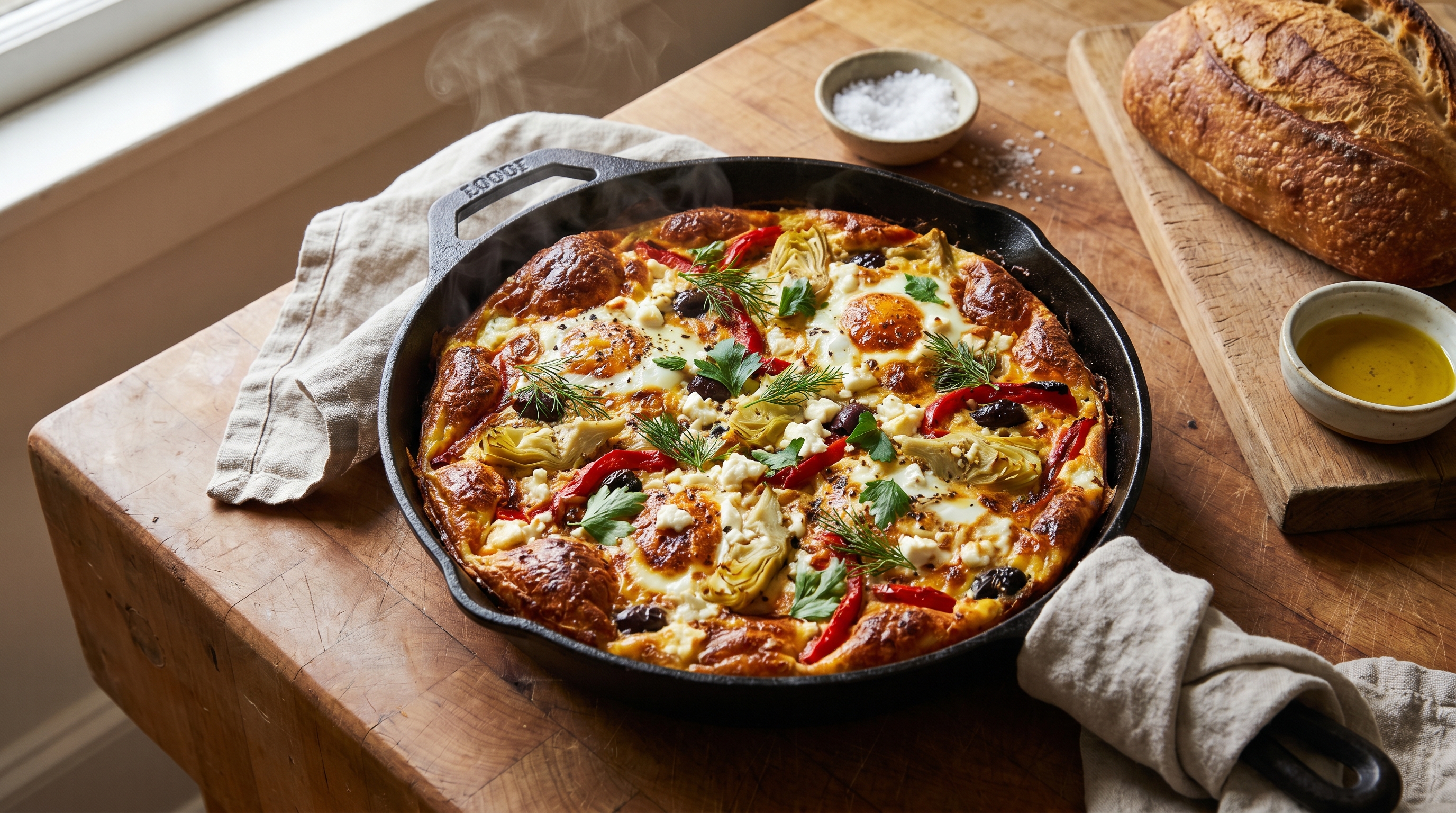

I've been learning to let go of food perfection for a while now, but it hit me differently the other evening. I pulled a frittata out of the oven and one side was golden, beautiful, the kind of thing you'd photograph. The other side was darker. Not burnt, but close enough that I would have hidden it six months ago. Turned the skillet so only the pretty half faced the table. Fussed about it.
This time I just set it down. My daughter grabbed a piece with her fingers before I'd even cut it, and she didn't care which side it came from.
The person I used to cook for
There's a version of me from two years ago who cooked for an invisible audience. Not my family. Not even myself, really. Some imagined critic who would notice if my onions weren't evenly diced or my sauce wasn't glossy enough. I spent more energy on presentation than on whether the food tasted good. More time arranging a plate than sitting down to eat it.
I don't know where that critic came from. Maybe food media. Maybe the way cooking content is always lit from above, always styled, always implying that love looks like precision. That care equals control.
What I noticed when the light changed
Something about this time of year strips away the performance. The evenings are longer. The windows stay open. There's less urgency to produce something impressive and more desire to just be in the kitchen without pressure. To crack eggs into a bowl and see what happens.
My husband ate three slices of that uneven frittata and said nothing about how it looked. He said it was good. He meant it. That's the whole review.
I think perfection was my way of justifying the time I spent cooking. Like if it wasn't beautiful, then the hour I took away from other things didn't count. The effort needed a visible result. Something worthy of being noticed.
But nobody in my house is grading me. My daughter doesn't know what a "properly set" custard looks like. She knows what tastes good and what she wants more of. That's it. That's the whole rubric.
The quieter version
Now I cook with less apology. The rice is sometimes too sticky. The chicken is sometimes a little dry on one side. I serve it anyway. I eat it anyway. I don't narrate what went wrong before anyone's taken a bite.
There's a freedom in that. In letting a meal just be a meal. Not a statement. Not proof of anything.
The frittata was good. Both sides of it. The darker edge was actually a little crispier, a little more interesting. My daughter went back for it twice.
I keep thinking about how much of cooking is really just deciding who you're doing it for. And how the answer changes everything. The invisible critic never once said thank you. Never once reached across the table with sticky fingers and asked for more.
I'm cooking for the people who do.