

I've been thinking about meals kids can help make, and I've come to a conclusion that would horrify the internet: the best ones look terrible.
My daughter is two. She cannot crack an egg. She cannot measure flour. What she can do is tear things. Smash things. Squeeze things with a focus and intensity that borders on unsettling. So that's where we start.
The Counter Is Not a Stage
There's this version of cooking with kids that floats around online. You know the one. Matching aprons. A toddler delicately sprinkling herbs onto a perfectly composed dish. Soft light. Clean counters. Nobody crying.
That is not what happens in my kitchen.
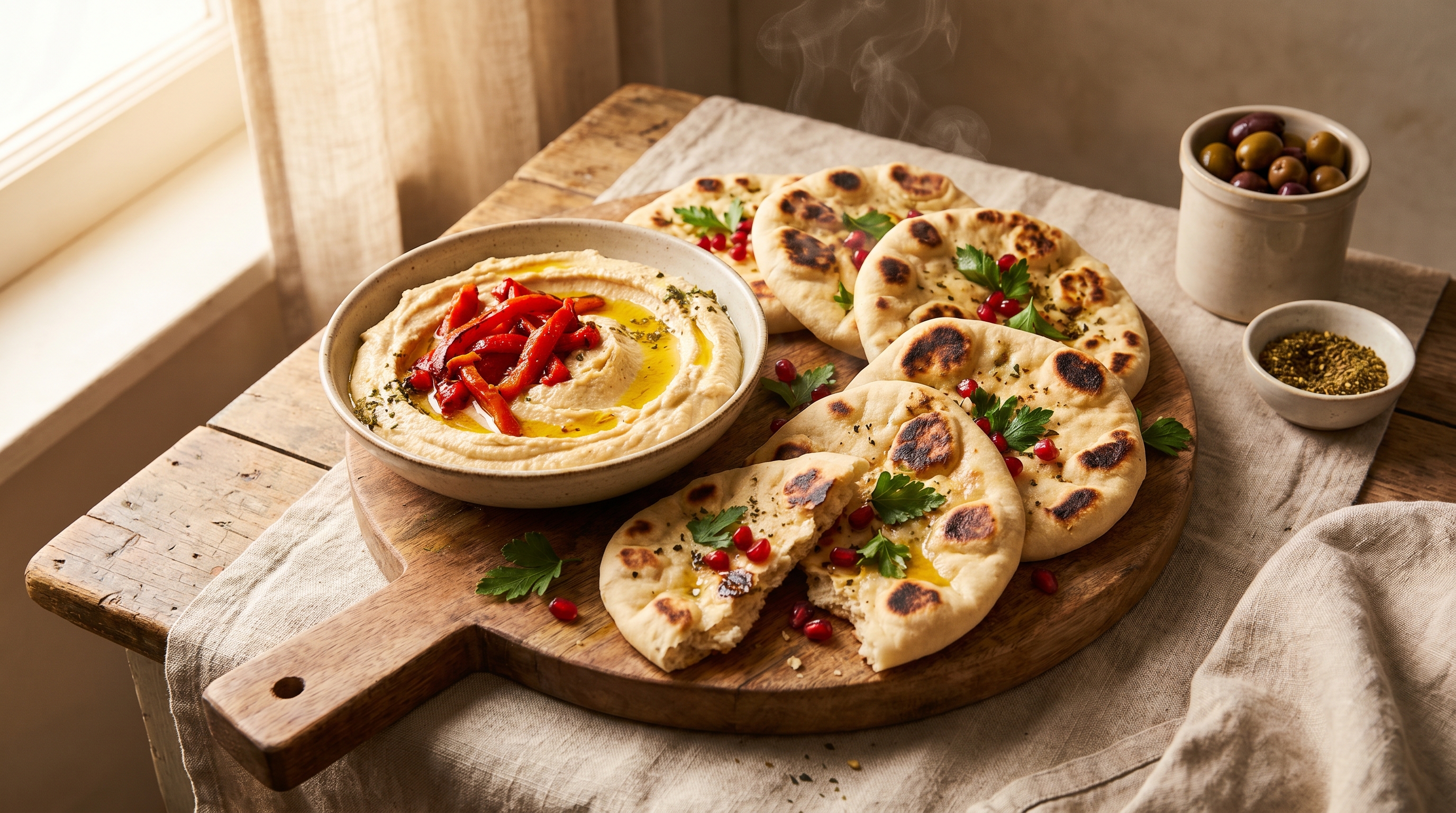
What happens is: I pull a chair up to the counter. My daughter stands on it, already grabbing. I hand her a piece of flatbread dough and she goes to work, which mostly means pressing it flat, then balling it up, then pressing it flat again. Flour ends up in her hair. On the floor. In places flour should not physically be able to reach.
The flatbreads come out lumpy and uneven. Some are thick in the middle and thin at the edges. Some look like small countries. She points at each one and says "mine" with the confidence of someone who has never once doubted herself.
What She's Learning (It's Not Cooking)
Here's what I think about when I watch her destroy my counter. She's not learning to cook. She's two. She's learning that the kitchen is hers, too.
That's different. That's bigger.
I grew up in a kitchen where I wasn't really allowed to help until I was old enough to do it "right." Which meant I didn't start cooking until I was a teenager, and by then I was already afraid of it. Afraid of messing up, of wasting food, of the stove itself. It took years to shake that.
So when my daughter squeezes a lemon with both hands and gets juice everywhere except the bowl, I don't correct her. I just quietly squeeze another lemon when she's not looking. The point was never the lemon juice.
The Slow Part
Cooking with a toddler takes roughly three times as long as cooking alone. This is not an exaggeration. The other evening I made flatbreads in about forty minutes by myself the week before. With her, it was over an hour, and I still had to redo half of them after she went to bed.
But something shifted for me recently. The evenings are longer now. That late spring light comes through the kitchen window sideways, warm and gold, and it just stays. There's no rush to beat the dark. We can take our time.
She tears pieces off the dough. I cook them in the cast iron. She eats them plain before I can add anything to them. My husband wanders in, eats one, says "these are good" without asking why they're shaped like that. A perfect response.
What Stays
She won't remember any of this. She's two. These evenings exist only in my memory, and in the flour I'll keep finding in weird places for days.
But I think the feeling stays. The warmth of the kitchen. The sense that she belongs there. The knowledge, stored somewhere deep, that food is something you make with your hands and share with the people next to you.
I don't know. Maybe I'm overthinking it. Maybe she just likes squishing dough.
Either way, I'm going to keep pulling that chair up to the counter.