

There's supposed to be a comfort food that fixes everything. I believed that for a long time. I believed it the way you believe your mom's voice can cure a stomachache, or that a hot bath can undo a bad day. Some truths you hold onto because letting go of them would mean admitting the world is harder than you want it to be.
The myth of the perfect bowl
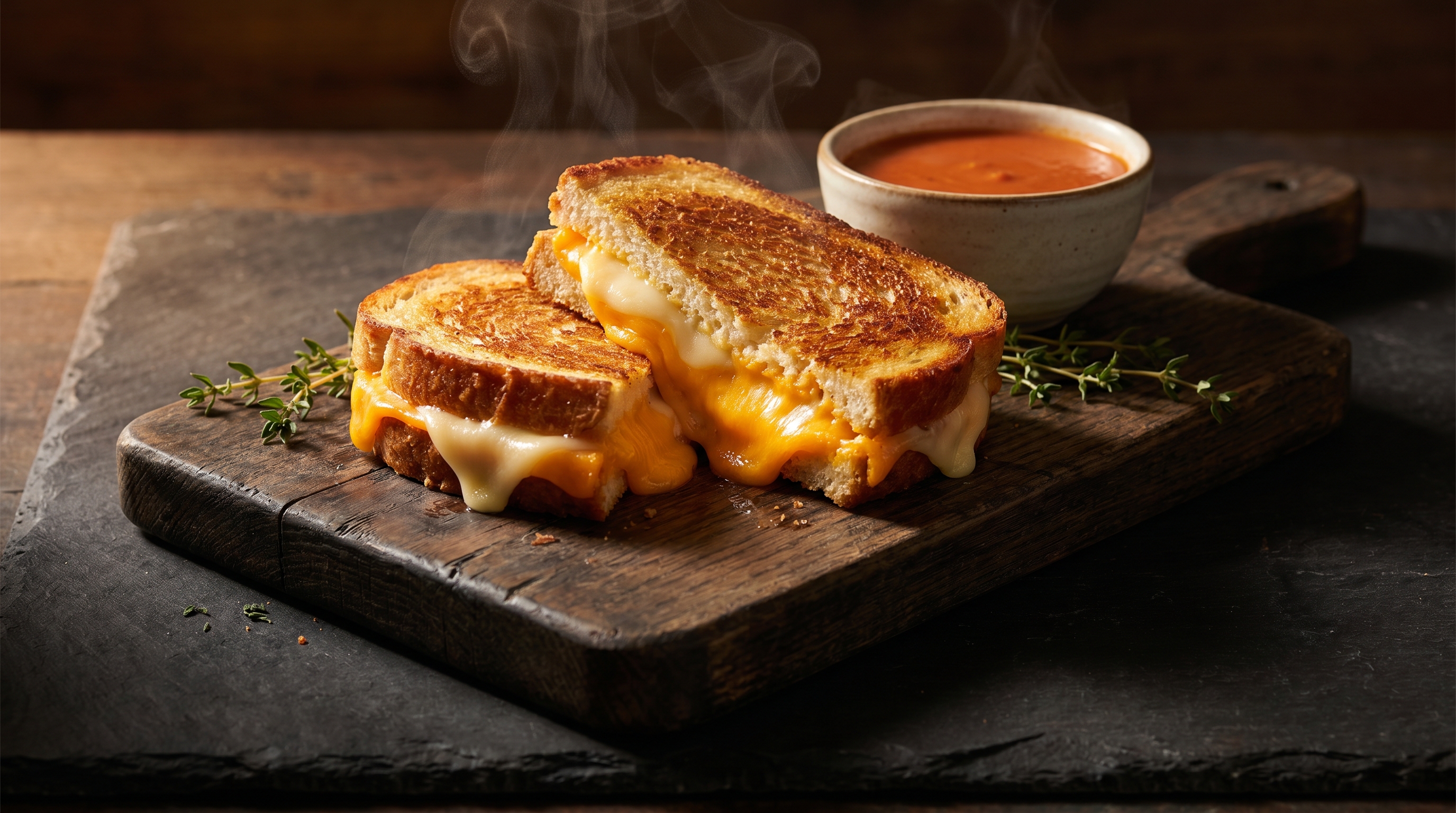
The other night I made grilled cheese. Not because I was craving it, but because the day had been long and loud and I couldn't think of a single other thing. My daughter had been fussy since the afternoon. My husband was on a call that ran late. The light coming through the kitchen window was that soft golden spring light that makes everything look like a memory, and I was standing there buttering bread with slightly shaky hands because I was just so tired.
Here's what I wanted: to take a bite and feel fixed. To feel the cheese pull apart and have something in my chest unknot. That's what comfort food promises, right? One bite and the world resets.
That's not what happened.
What happened was I ate it standing at the counter, too hungry to sit down. It was good. The bread was crispy, the cheese was melted perfectly, and I'd used that good butter I save for things that matter. But I didn't feel fixed. I felt fed. Those are different things.
What we're actually hungry for
I think we talk about comfort food like it's medicine. Like chicken soup is literally penicillin. Like a pot of mac and cheese can reverse a terrible week. And I get why. Food is the most accessible form of care most of us have. You can't always afford therapy or a vacation or even a full night of sleep. But you can make toast.
The thing is, the comfort isn't really in the food. It's in the act. It's in deciding you're worth the effort of melting butter in a pan when you could just collapse on the couch. It's in the three minutes of standing still, watching bread turn golden, not answering anyone or solving anything. The sandwich is secondary. The pause is the point.
My daughter wandered into the kitchen while I was eating. She pointed at my plate and said "bite?" so I tore off a corner for her. She ate it solemnly, like she was considering the craftsmanship. Then she handed me a wooden block from her pocket, which I think was a trade.
That moment did more for me than the sandwich.
So what does fix things?
I don't know. Not fully. But I think it's smaller than we expect. It's not the perfect recipe or the right ingredient or some nostalgic dish from childhood. It's someone noticing you're tired. It's your kid offering you a block. It's your husband walking in after his call and saying "you ate without me? Good. You should have."
Food doesn't fix everything. But choosing to feed yourself when you're depleted, choosing warmth and butter and a few minutes of quiet, that's not nothing. That's you taking care of someone who deserves it.
Even if that someone is just you, standing at the counter, eating a grilled cheese alone in the golden light.