
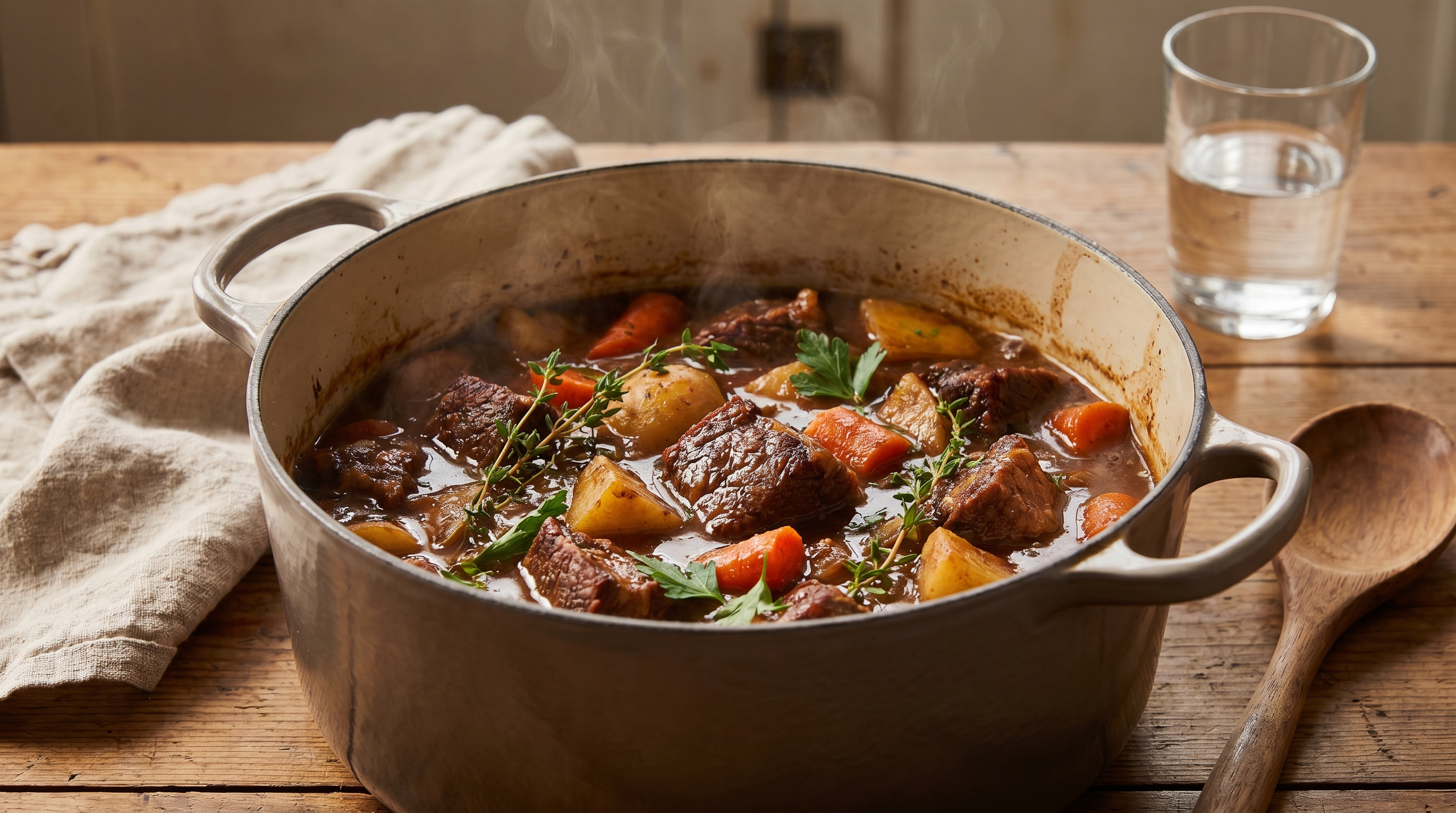

There's always a night in late fall when I make the meal that says winter is here. It's not planned. I don't circle it on a calendar. It just happens. The light drops early, the apartment feels colder than the thermostat says it should, and suddenly I'm pulling out the Dutch oven like it's been waiting for me.
The Other Side of That Night
I'm thinking about this now because I'm on the opposite end of it. The windows have been open for weeks. Dinner has gotten lighter, faster, less ceremonial. I made a grain bowl the other night and ate it standing at the counter while my daughter smashed avocado into her hair. Nobody lit a candle. Nobody lingered.
And I don't miss winter, exactly. But I miss the weight of those meals. The ones that took two hours and made the whole apartment smell like garlic and wine and something deeply, fundamentally okay.
What Changes When the Light Does
Spring cooking is efficient. It respects your time. You're not trapped inside anymore, so dinner becomes a thing you move through rather than a thing you settle into. That's fine. That's good, even. My husband doesn't complain about a 20-minute dinner. My daughter doesn't know the difference between a braised short rib and a quesadilla. She's two. She's happy either way.
But I notice the difference in myself. Winter cooking made me slow down in a way that nothing else in my life does. Marketing doesn't slow down. Toddlers don't slow down. The dishes don't slow down. A braise forces patience. You can't rush it. You just have to be in your kitchen, stirring occasionally, trusting the process.
Spring doesn't ask that of me. Spring says: get it done, get outside, the evening is short and bright and there are better things to do than hover over a stove.
The Gratitude in the Missing
Here's what I think I'm circling around. Cooking isn't just about feeding people. It's about marking time. The meal that announces a season is a kind of ritual, even if you don't recognize it as one. When I pull out that Dutch oven in October or November, fill it with beef and stock and whatever root vegetables haven't gone soft in the drawer, I'm saying something to myself. Something like: we made it to the other side of the year. Something like: here's the part where we hunker down.
Right now, with the windows open and the light gold and long, I don't need that. But I'm glad it exists. I'm glad there's a version of dinner that feels like pulling a blanket over your shoulders.
My daughter won't remember any of this. She won't remember the smell of that first winter stew, or the way the apartment windows fogged up, or how her dad always burned his tongue on the first bite because he has zero patience. She's too young. But I'll remember it for her, and eventually I'll make it with her, and maybe one day she'll stand in her own kitchen on some cold night and think: this feels like something. I don't know what. But something.
That's enough. That's the whole point, I think.