

I wasn't thinking about what's in season right now to cook. I was thinking about light.
Specifically, the light in my kitchen around 6 PM, which for months has been this flat gray nothing that made cooking feel like a chore performed in a cave. Then the other evening I looked up from chopping and the counter was warm. Like, golden. The sun was hitting the cutting board at an angle I hadn't seen since last fall, and I just stood there for a second, knife in hand, feeling something I can only describe as relief.
That's when the cooking changes for me. Not when some calendar says spring has arrived. Not when a grocery store puts up a display of whatever produce they want to move. When the light shifts.
The Grocery Store Doesn't Know What Season It Is
Here's what bugs me about most seasonal cooking guides. They hand you a list of vegetables and say "these are in season now, go buy them." Which is fine, technically. But it skips the part that matters.
Seasonal cooking isn't really about memorizing which months strawberries peak. It's about noticing. Walking through the store and seeing what looks good instead of what a recipe told you to find. The stuff that's in season is usually the stuff that's piled high, priced low, and looks like it wants to be eaten today. You don't need a chart for that. You need to slow down for ten seconds in the produce section.
My daughter couldn't care less about seasonality. She wants strawberries every single day regardless of the month, and I respect that energy. But I've noticed she eats more when I'm excited about what I'm cooking. Enthusiasm is contagious, even to a two-year-old who would prefer buttered noodles for every meal until the end of time.
What Changed for Me
The real shift wasn't about ingredients. It was about heaviness. All winter I cooked like I was insulating us. Braises, stews, thick soups, bread with everything. Food that sits in your stomach like a warm brick. I loved every bit of it.
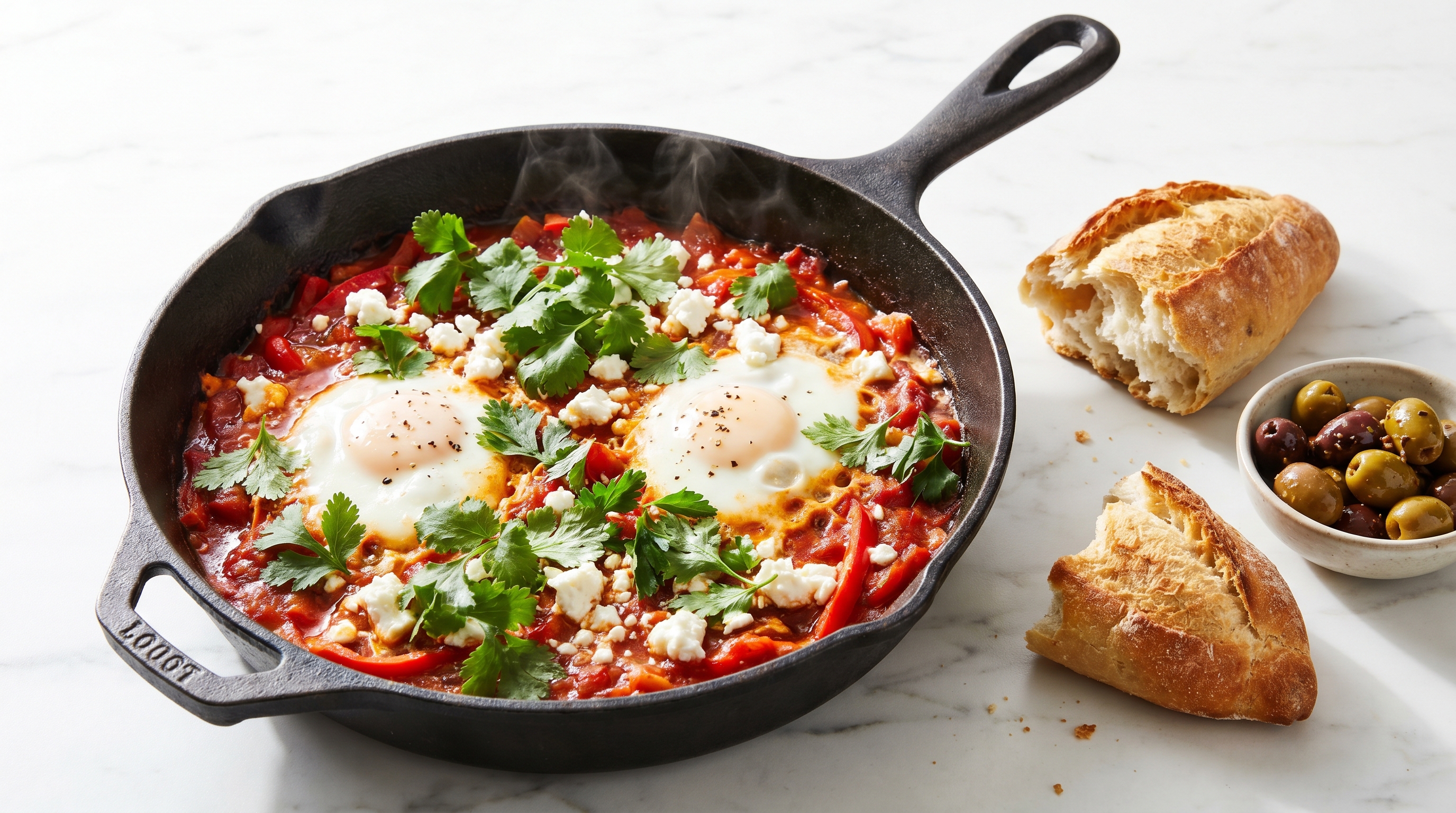
But the other night I made eggs in a quick tomato sauce, crumbled some feta over the top, and ate it out of the skillet with toast. The whole thing took maybe twenty minutes. My husband had seconds, which from a man who considers cereal a complete meal is basically a standing ovation.
It wasn't lighter because I was trying to be healthy. It was lighter because that's what the evening wanted. The window was cracked open. There was a breeze that smelled like dirt and cut grass. Heavy food would have felt wrong.
The Budget Part Nobody Mentions
Cooking with what's abundant right now is cheaper. Full stop. Not because of some complicated economic theory, but because supply and demand still works at your grocery store. When there's a mountain of something by the entrance, it's cheap. When they're importing it from another hemisphere, it's not. You don't need a seasonal eating guide. You need to look at the prices.
I saved real money this way without even trying. Just by asking "what looks good?" instead of "what does this recipe need?"
The Quiet Part
There's something I keep thinking about. For most of human history, people didn't choose to eat seasonally. They just did. There was no option to get anything from anywhere at any time. You ate what was there, and you were grateful, and you probably got really creative with it.
Now we have everything all the time and somehow dinner feels harder than ever.
Maybe the answer isn't a better system. Maybe it's just opening the window, seeing what the light looks like, and cooking whatever feels right.